
You have identified your process as involving:
- ✓ change(rather than no change)
This means that certain aspects of the process—such as the mean, variance, and/or dynamics—transform over time.
Follow-up question:
Is the change sudden or smooth?
sudden change
Transformation occurs abruptly over time. This may involve sudden shifts in the mean, an abrupt change in the underlying trend, a sudden increase or decrease in the variance, or sudden changes in the dynamics.
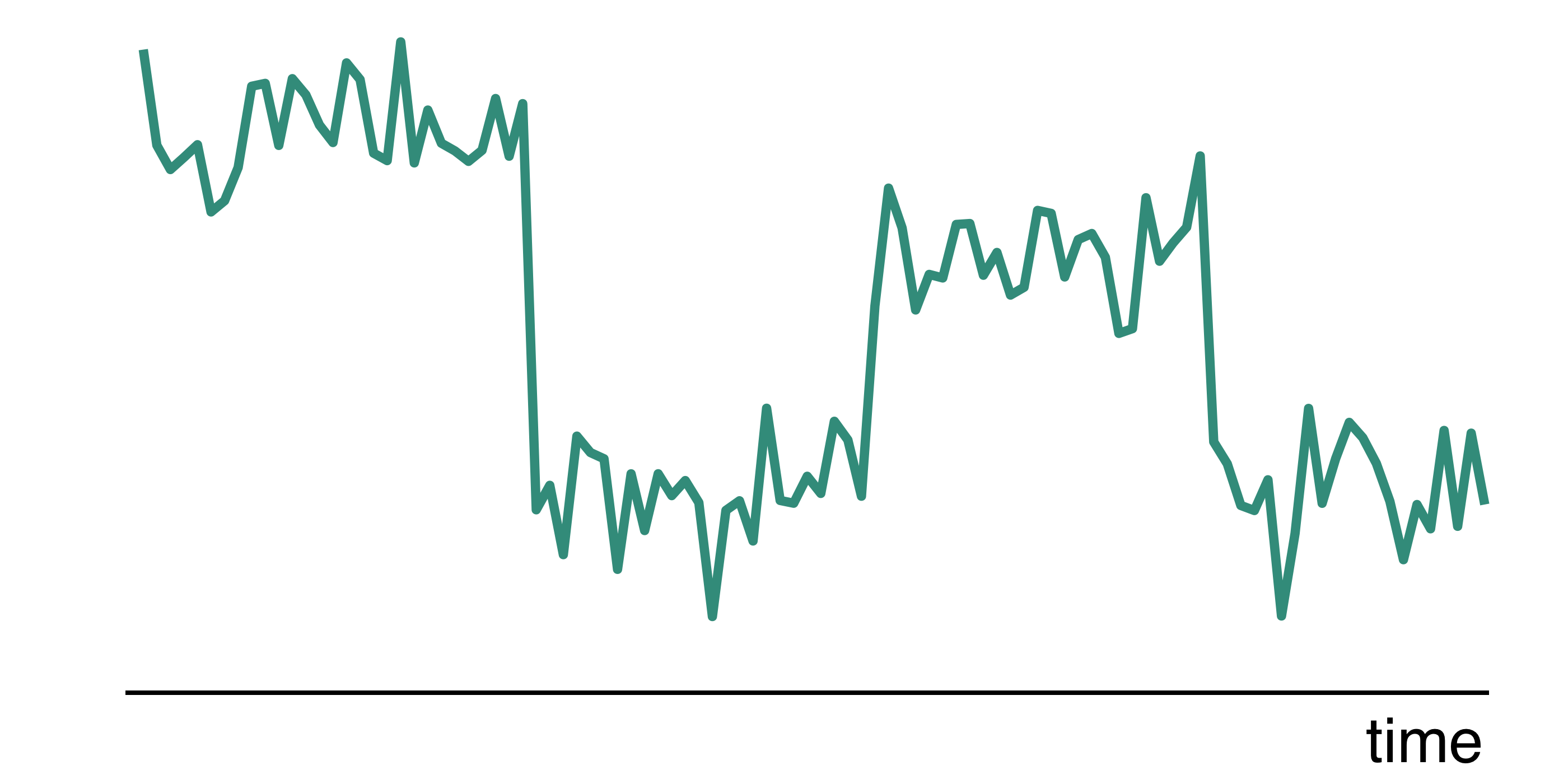
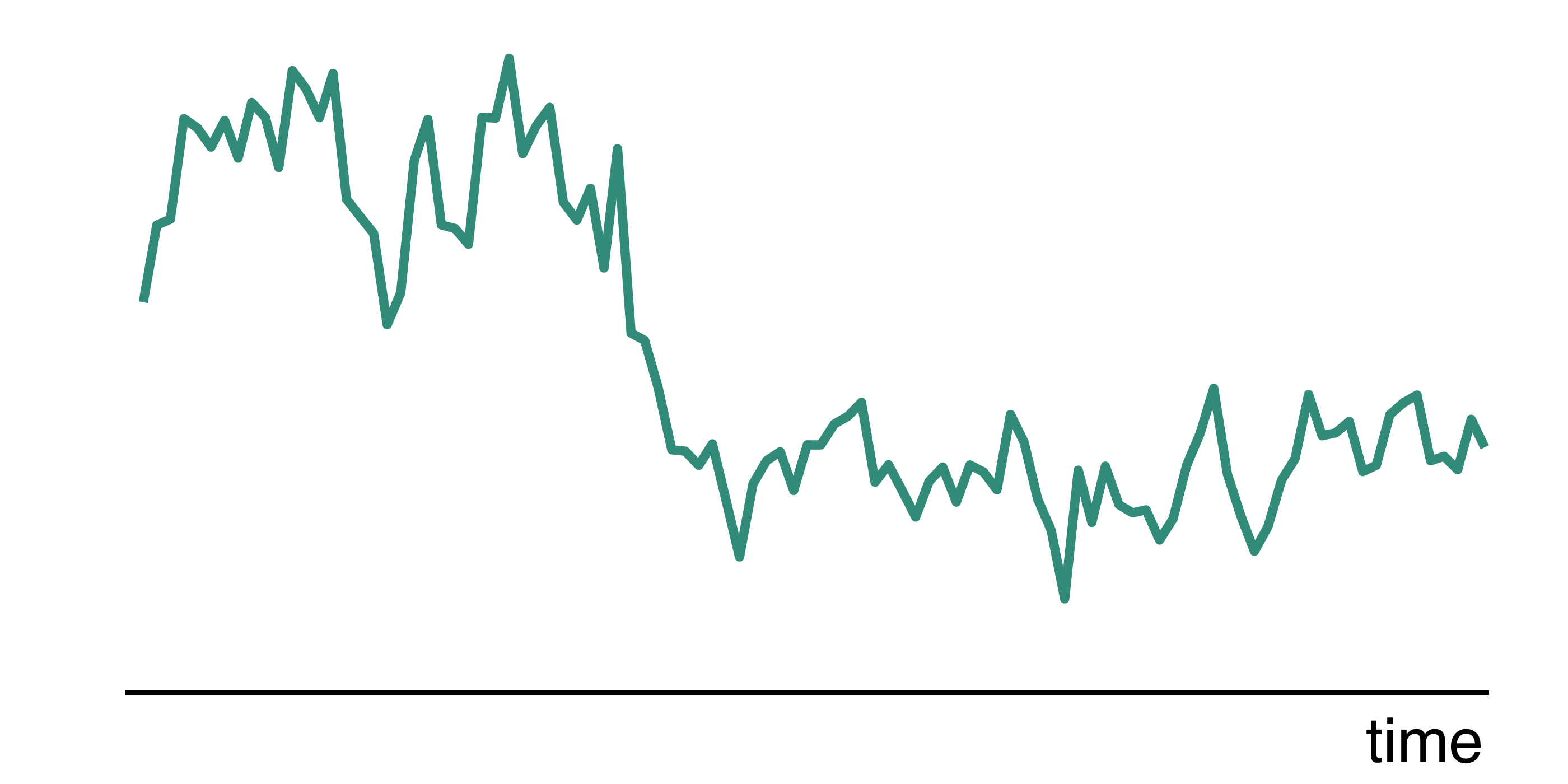
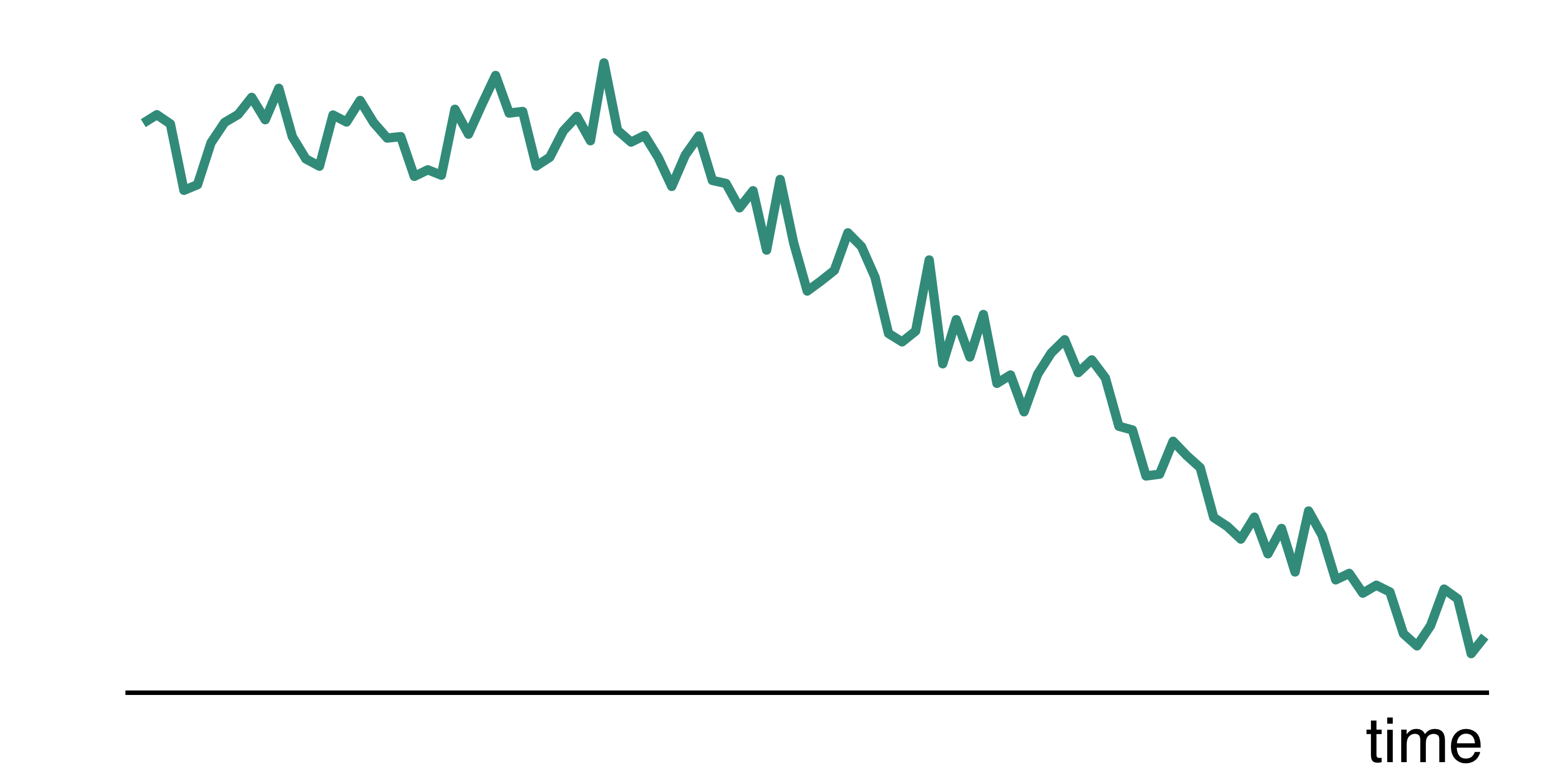
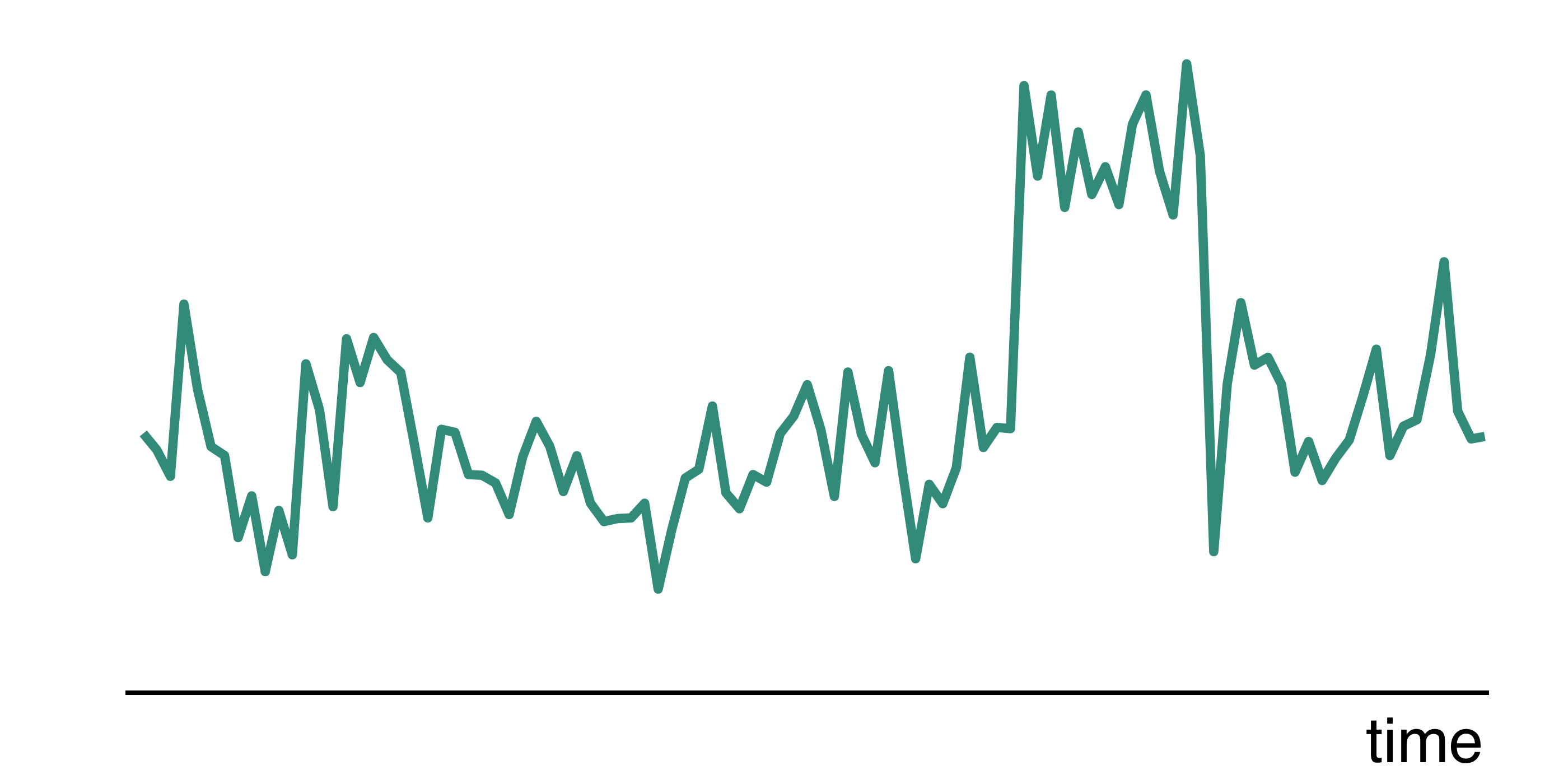
smooth change
Transformation occurs gradually over time. This may concern the mean, the variance, or dynamics of a process. Change may be linear over time, or show more complex patterns, like alternating between increases and decreases.
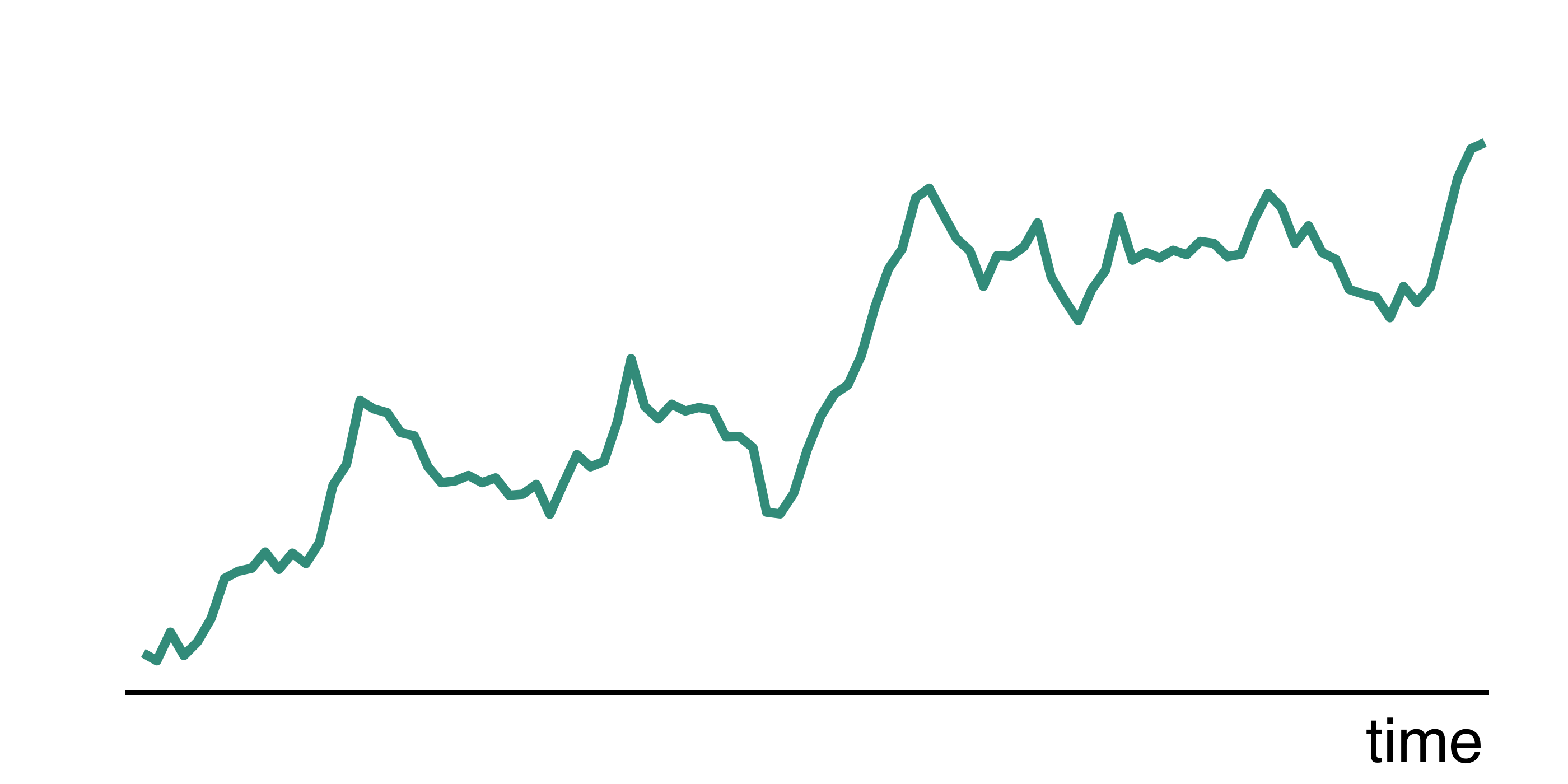
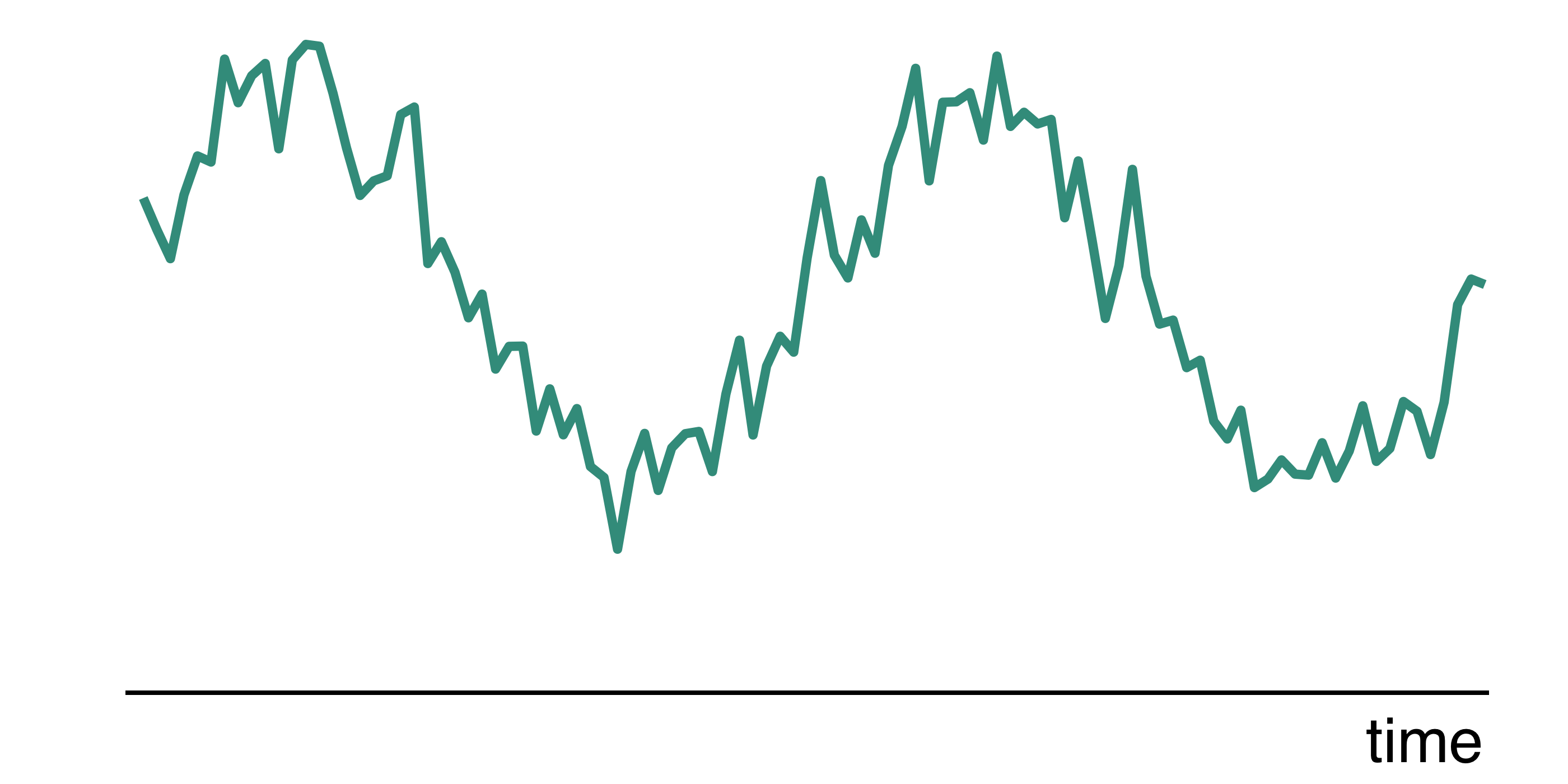
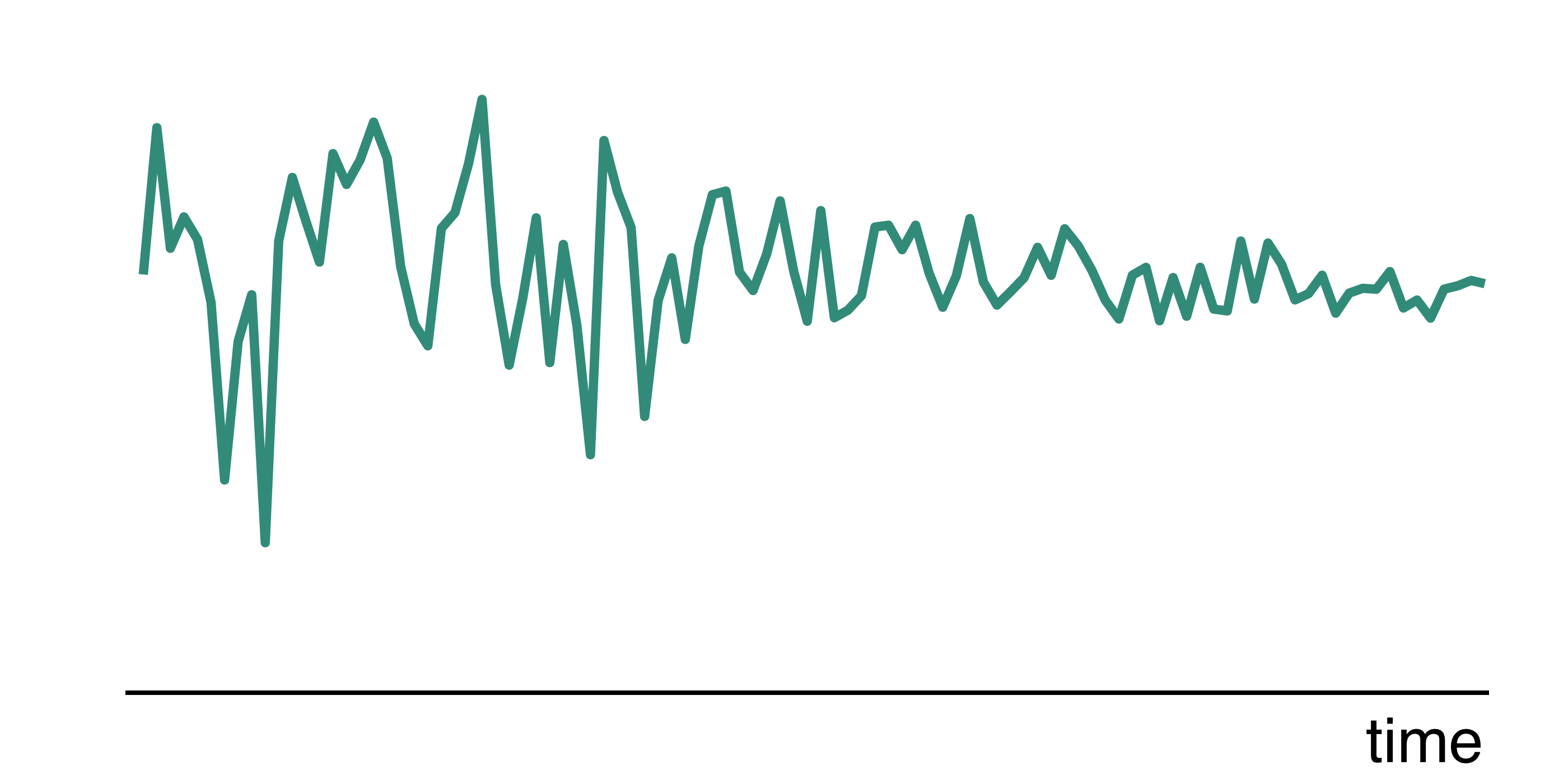
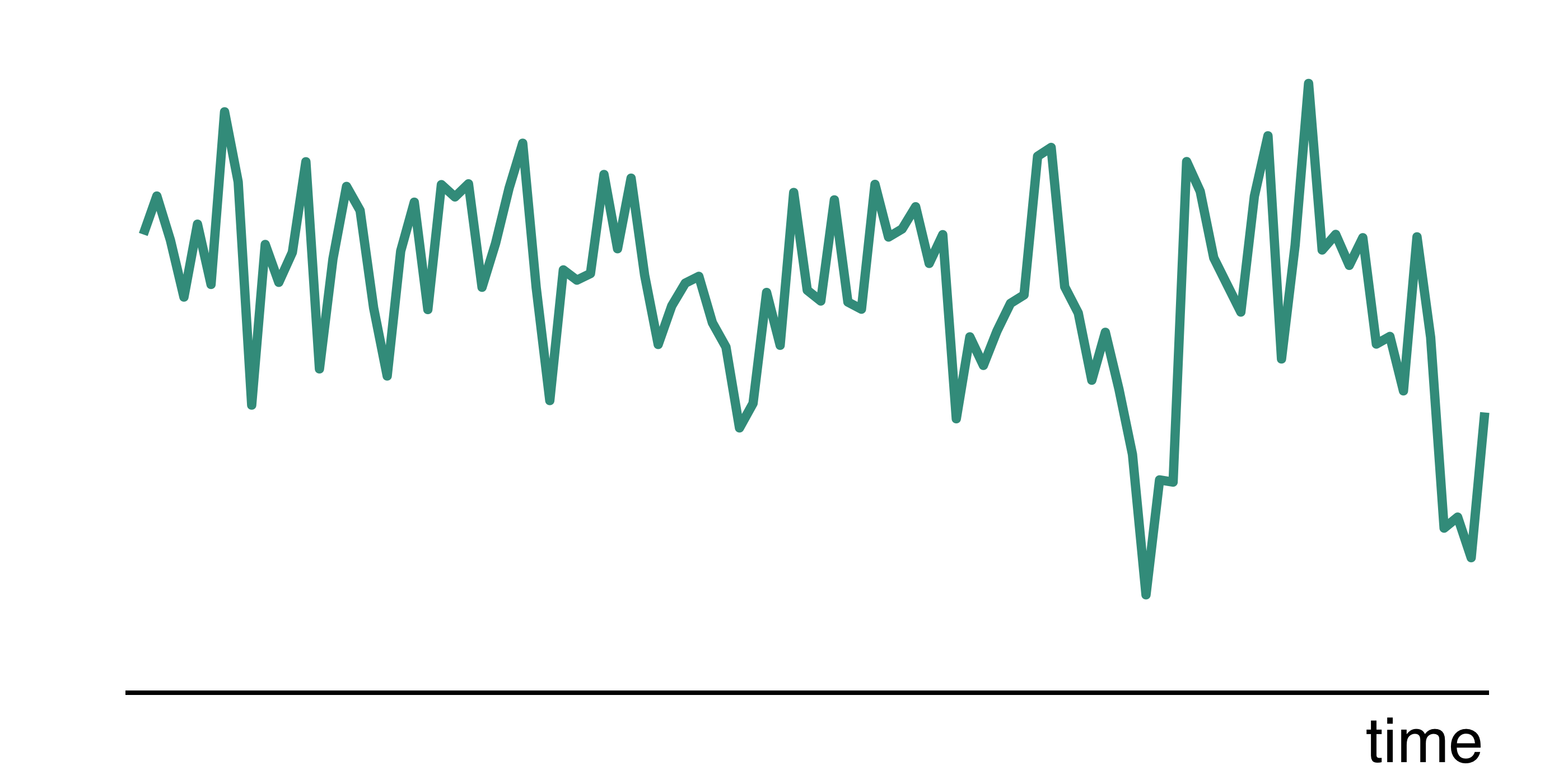
I think my process involves:
Not sure?
When you theorize about the process you are interested in, you may conclude that both smooth and sudden changes are likely to be present. For instance, you may expect that there is a trend over time representing smooth change in the mean, and that at a certain point in time the direction of this trend abruptly changes, signifying a sudden change. In that case, you should proceed with the sudden change option: Models in this category allow for sudden changes in an otherwise stable mean, but also allow for sudden changes in other characteristics of the process, such as its trend, variability, and/or dynamics.
When you look at empirical patterns in your intensive longitudinal measurements, it may be challenging to see whether a change in the underlying process is smooth or sudden. This can be especially hard when the amount of variability is large in comparison to the change, or if the variability and/or dynamics of the process changes, rather than its mean or trend. Moreover, some models are characterized by sudden changes in the parameters, but these may translate into somewhat smooth changes in the observed time series. This is for instance the case in certain regime-switching models with autoregression: The regime switch implies an underlying sudden change, but the autoregression implies some carry-over in the observations, which shows up as a more gradual change.
If you are unsure whether underlying features of your process are characterized by sudden or smooth change, you are advised to continue with both options to get a better overview of the various modeling possibilities.